mixbaclink
Selling affordable
women's fashion. Casual dresses, sexy lingerie, comfortable jeans and much
more. Find a little bit of everything you need for your next outfit at everyday
great prices, exclusively at MJ's Overstock
Discover
this season's latest women's fashion and trends here at PrettyLittleThing. With
100's of new styles updated daily, it’s your new one stop shop for updating
your new season wardrobe. Need something new? We've always got you covered
doll. Browse the latest styles from our new in collection. This is the one
place you can shop for any occasion. Give your wardrobe a refresh for your
everyday essentials or why not check out our weekend worthy outfits? Our edit
of clothing is sure to have you feeling your best. Browse the newest arrivals
in Women's Clothing and shop now at PrettyLittleThing.
Traditional Russian Women’s Clothing

Traditional Russian clothing not only protected from heat and
cold, it also told about a wearer’s marital status, age, and origin. Each type
of clothing had characteristic details and a special design. Not least
important was the choice of cloth, while the decorations, finish and cut each
had symbolic meanings.
According to researchers, traditional Russian dress took shape
roughly in the 12th century. Up until the 18th century, this clothing was worn
by all members of society, from the poorest peasants to the richest boyars and
rulers. After a decree by Peter the Great in the late 1600s, traditional Russian
attire was replaced by European clothing. Peter was convinced that the older
“folksy” dress wasn’t suitable for a country that was trying to be an economic
and cultural partner with Europe. Some researchers think that this was in fact
not a political move, but just an expression of Peter’s own taste. From this
time onwards, traditional Russian dress became only for peasants, and was
preserved only among the lower classes. This decree was enforced by strict
fines for making or selling traditional Russian clothing.
There were two main types of Russian clothing: for celebrations
and for everyday wear. Both types of clothing were made of multiple layers of
cloth, and could either be straight fitting or have a flare. Emphasizing the
waist was not common. Brightly colored cloths were preferred.
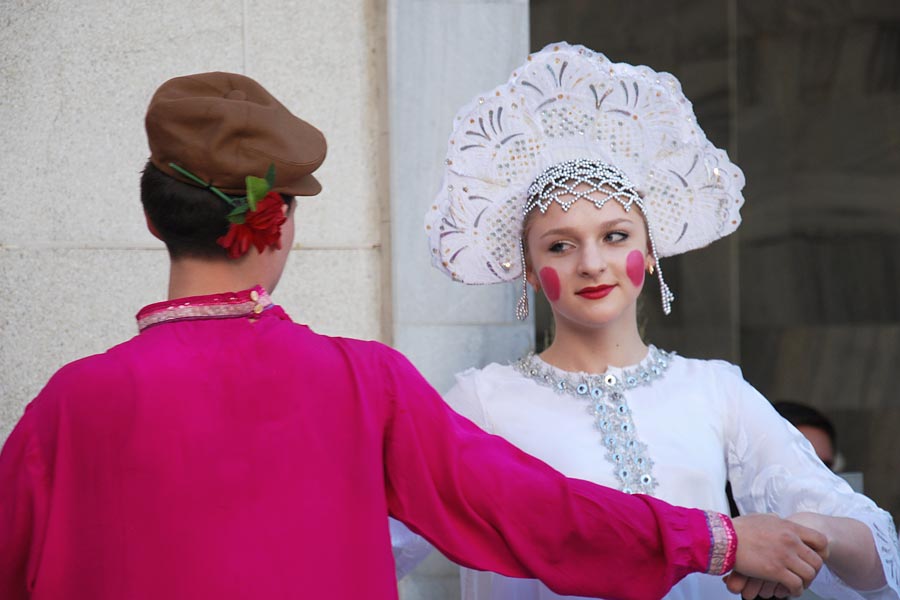
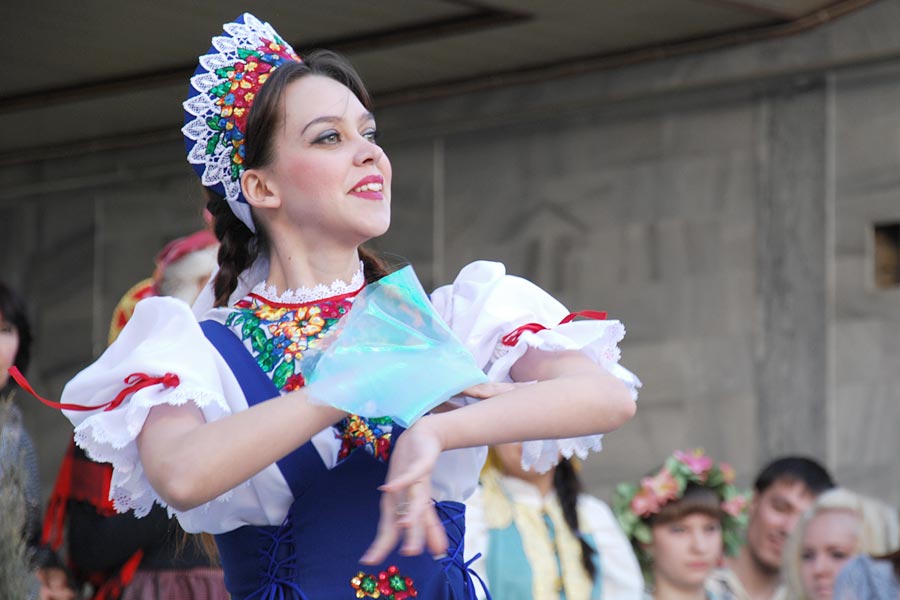
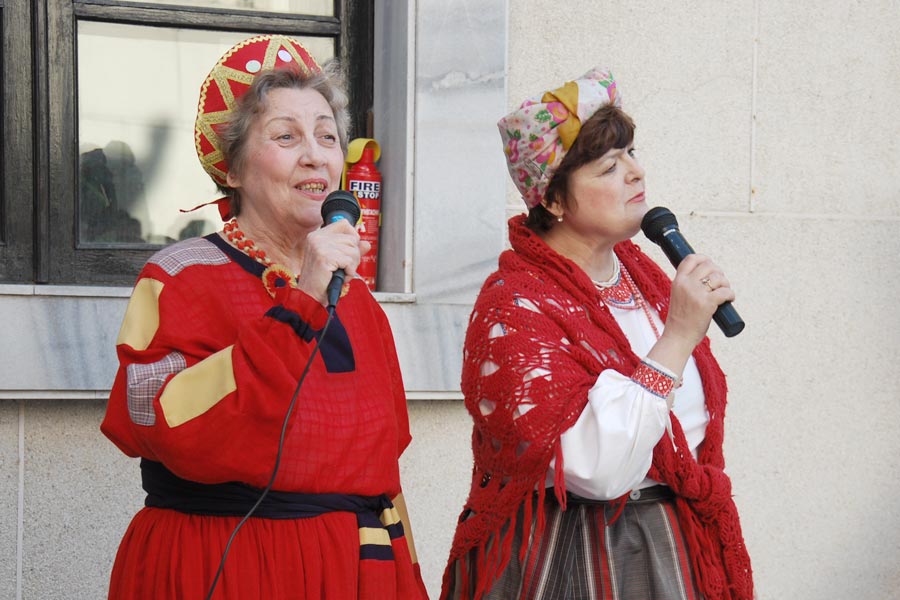
The hem of shirts, as well as the collars and sleeves, were
richly decorated with embroidery, plus braids, sequins, and buttons. Patterned
inserts were also used while sewing clothing, while for a festive costume, the
front of the shirt would be entirely covered in designs.
Each region had its own designs and ornaments that were used for
decorating Russian clothes, and color schemes could also vary. In the villages
and towns around Voronezh, clothing was decorated with black embroidery, which
was considered to be very elegant. In northern and central areas, people
preferred more bright variations, including embroidery with gold thread or
brightly-colored silk or cotton. The most common colors were red, dark blue,
and black.
In southern Russia, traditional Women's Clothing
consisted of a long, plain shirt and a long skirt, made of three pieces of
cloth stitched together. This was the most common clothing for married women.
The hem would often feature embroidery and other decorations. The cloth of the
skirt contained wool, in comparison to the shirt, which was made of just
cotton. A wool string, called a gashnik, held the skirt in place, and an apron
was often worn over the skirt. In the south, the shirt was also often richly embroidered
with designs.
Sarafan
- The traditional Russian sarafan, or
pinafore dress, unsurprisingly has eastern roots. The word “sarafan” means
“dressed entirely”. There were several different types of sarafans:
- Trapezoidal sarafans (“plowing
sarafans”) were worn in the Urals. The seam that joined the two pieces of
fabric was joined in the front of the garment, and was decorated with
buttons or ribbons.
- The “deaf” sarafan didn’t have a seam in
the front. This garments was made of one large sheet of cloth.
- The “circular” sarafans were comfortable
to wear because of their large size and shoulder straps.
- The color of sarafans depended on
whether they were for everyday use or for special occasions. The most
popular colors were red, light blue, dark blue, and dark red. Everyday
sarafans used rough cloth or calico, while ones for special occasions used
brocade or silk. On top of the sarafan women would also wear a
dushegreika, or cardigan, which could be made from either rich or simple
material.
Everyday
and Special Russian Clothing
There was a very distinct line in traditional Russian dress
between clothing for everyday use and clothing for special occasions.
Everyday clothing was simple, and there were fewer pieces to be
worn (no more than seven). The materials were inexpensive, and the design made
them comfortable to work and move in.
For special occasions, there could be 20 or more elements to be
worn. More expensive cloths were used, including wool, brocade, and velvet.
These outfits were only brought out for special celebrations and festivals, and
the rest of the time they were stored in large chests. Some types of dress were
for rituals and special events, such as attending church, funerals, or
christenings.
Decorations
Women of any age loved a variety of decorations. Russian
clothing was covered in beads and worn with luxurious necklaces, earrings, and
pendants. In wealthy families, buttons were decorated with inlaid stones,
filigrees, and engraving.
Headdresses were also often decorated. Unmarried girls wore
bright ribbons, headbands, wraps, and other various intricately tied scarves.
After marriage, women completely changed their clothing. Married women completely
hid their hair under a headdress with a scarf on top. These richly decorated
headdresses were part of special clothing, while everyday wear was bonnets with
a scarf made of cotton or linen.
Contact Info:
Instagram: https://www.instagram.com/mjoverstock/
Twitter: https://twitter.com/MJ_Overstock
Facebook: https://www.facebook.com/MJOverstock
Website: https://mjoverstock.com/

Comments
Post a Comment